
Our Research Team
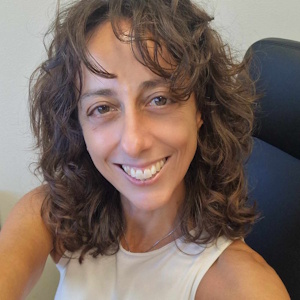
Dr. I. Kalantzi
Institute of Oceanography
HCMR
Dr Ioanna Kalantzi is the Principal Investigator and Coordinator of the SeaSeMe project. She is Senior Researcher at the Institute of Oceanography of the Hellenic Centre for Marine Research (HCMR). She is a Chemist with an MSc in Environmental Sciences and a PhD in Environmental Chemistry & Biology. Her research has contributed to the understanding of the human risk and benefit assessment through the consumption of fish and seafood and the bioaccumulation, bioavailability and trophic transfer of contaminants, such as metals, elements, POPs, and nanoparticles and micro- and nanoplastics, in the marine environment and in marine organisms, on speciation analysis of metals, and the aquaculture ecosystem interactions. She has been involved in several RTD projects (national and EU funded) such as WFD, MSFD, iMERMAID, AQUACOSM, TAPAS, POSEIDOMM, AQUA-NANO, HYPOXIA. She was the Principal Investigator of (1) the MetaFRisks project MetaFRisks (Advanced Metallomics Analysis in Fish for Improved Assessment of Human Risk and Environmental Quality) supported by the Hellenic Foundation for Research and Innovation (HFRI) under the “2nd Call for H.F.R.I. Research Projects for the support of Post-doctoral Researchers” and (2) the MOCo Sea Pass project (JERICO-NEXT TNA -EU): ‘Monitoring of Organic Contaminants in the water of the Southern Europe with Passive Sampling’. Results of her work have been published in more than 35 international peer reviewed journals (h-index 20, >1250 citations, February 2026), and in several conference presentations and posters. Dr Kalantzi coordinates the SeaSeMe project and she is responsible for the implementation of the Work Packages related to the data collection and analysis of samples (if needed) for the platform (WP1); the development of the platform and the Android application (WP2); the training activities for community engagement and the dissemination/ exploitation activities (WP3). She is also responsible for fulfilling the technical, scientific, financial, administrative, and reporting obligations required and supervising its successful implementation (WP4).
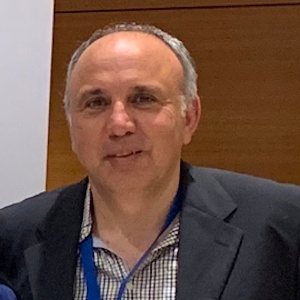
Dr. M. Tsapakis
Institute of Oceanography
HCMR
Dr. Manolis Tsapakis is Research Director (Grade A) at the Institute of Oceanography of the Hellenic Centre for Marine Research (HCMR). He holds a Ph.D. in Environmental Organic Chemistry (2003) and a B.Sc. in Chemistry (1993). His research has significantly contributed to the understanding of the fate and behavior of inorganic and organic substances released from point sources, with a particular focus on aquaculture activities. He leads an active research team working on the environmental sustainability of aquaculture development in the European Union, with research interests encompassing improved spatial planning within aquaculture development zones to prevent impacts on marine ecosystems, calculation of carrying capacity to support optimal and sustainable increases in production, development of tailored, area-specific environmental monitoring plans, mitigation of conflicts with other coastal zone users such as fisheries and tourism, and reduction of environmental impacts through effective aquaculture management and development strategies. In addition, he has worked on studies assessing the benefits and potential risks associated with fish and seafood consumption for human health, including exposure to contaminants and essential trace elements. He has served as team leader or principal investigator in several recent and ongoing EU-funded and international research projects, including TAPAS, IDMA, AQUAPEF, and USV-ARGO, as well as projects supporting the implementation of the Marine Strategy Framework Directive (MSFD) and the Water Framework Directive (WFD). In SeaSeMe project, he will contribute to the collection of Hg and Se data for fish and seafood, as well as to sample analysis for the creation of the platform (WP1) and to training activities for community engagement (WP3).
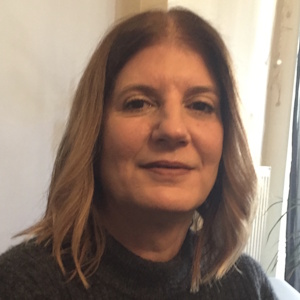
Dr. C. Tsangari
Institute of Oceanography
HCMR
Dr. Catherine Tsangaris is an expert in marine ecotoxicology and Researcher Director in the Department of Biological Oceanography, Institute of Oceanography, Hellenic Center for Marine Research (HCMR). She participates in the National Programme for the implementation of the Marine Strategy Framework Directive (MSFD) in Greece, coordinating D9 (Contaminants in fish and other seafood for human consumption). Her work focuses on biomarkers, bioassays, and assessing physiological, cellular, and biochemical responses of marine life to environmental stress and contamination. In SeaSeMe project she will contribute to the collection of Hg and Se data for fish and seafood, as well as to sample analysis for the creation of the platform (WP1) and to training activities for community engagement (WP3).
Dr. E. Strogyloudi
Institute of Oceanography
HCMR
Dr. Evangelia Strogyloudi is a Biologist-Oceanographer and works as a Senior Researcher at the Institute of Oceanography of the Hellenic Centre for Marine Research (HCMR). Her research interests include the accumulation and biological effects of contaminants in marine organisms, the toxicity of contaminants in marine biota under climate change conditions, harmful algal bloom toxin transfer within the food web, the physiology of marine organisms. She is familiar with various methodologies through her participation in several related research programmes. In SeaSeMe project, she will contribute to the collection of Hg and Se data for fish and seafood, as well as sample analysis for the creation of the platform (WP1) and to training activities for community engagement (WP3).
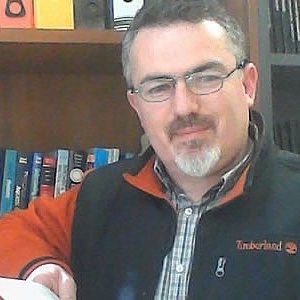
Prof. S. Pergantis
Department of Chemistry
University of Crete
Prof Spiros Pergantis is a professor in the Department of Chemistry at the University of Crete. His PhD focused on the analysis of arsenic compounds in environmental and biological samples. He has extensive experience in research, teaching, and the development of analytical and spectrometric methods for the qualitative and quantitative determination of metal compounds in biological and environmental samples. As an expert in analytical chemistry, in SeaSeMe project, he will contribute to the collection and analysis of fish and seafood samples for Hg and Se (WP1), developing ways to communicate scientific data to the users of the platform/application using simple to understand messages and easy to follow suggestions for an improved seafood diet. Messages will be based on Hg and Se levels, and the Selenium Health Benefit Value, for each seafood plate, notifying the consumer when they may be at risk of adverse health effects from Hg toxicity, but also when they have maximized their gain from sufficient Se uptake (essential human nutrient) (WP2), and training activities at CHEM-UoC for platform promotion and usage and community engagement at the University (WP3).
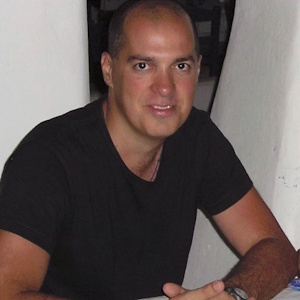
Prof. G. Tsiotas
School of Social Sciences
University of Crete
Dr. Georgios Tsiotas is an Associate Professor in Quantitative Methods and Economics at the University of Crete. He holds a PhD in Econometrics from the University of Essex and he has research and teaching experience working in internationally reputed institutions such as: the Imperial College, the London School of Economics, and the University of Sydney. He has extensive experience in teaching Statistics, Business Statistics and Econometrics at undergraduate and postgraduate level. His research interests are in Forecasting, Financial Econometrics, Bayesian Inference and Environmental Statistics. His research work has been published in journals such as: Computational Statistics and Data Analysis, Journal of Statistical Computing and Simulations, Journal of Agricultural Biological and Environmental Statistics, International Journal of Climatology, Theoretical and Applied Climatology, Statistical Methods and Applications, Quantitative Finance, Journal of Forecasting, etc. As an expert in quantitative methods, economics, and statistics, in SeaSeMe project, he will contribute to the verification of the collected data using statistics (WP1); to the development of the platform and the Android application (WP2); and to training activities for the platform usage and community engagement at the University of Crete (WP3).
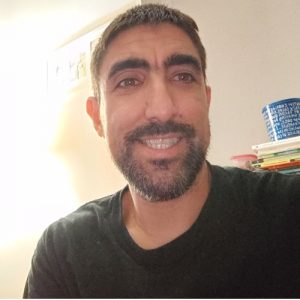
D. Sakellaridis
School of Social Sciences
University of Crete
Dimitris Sakellaridis is a member of the Academic Staff at the School of Social Sciences, University of Crete, where he is responsible for the School’s Computer Laboratories and oversees the university’s electronic services. He holds a degree in Telecommunications and Network Engineering from King’s College London and an MSc in Advanced Computer Science from Imperial College London. He has participated in numerous research groups at the University of Crete, providing technical support and contributing to website development, database design, and the implementation of digital infrastructure solutions. As an expert in advanced computing and web design, in SeaSeMe project he will contribute to design and build the platform and the Android application (WP2) and also, he will be part of the training activities for platform usage (WP3).
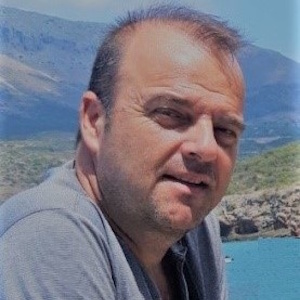
Prof. L. Kokokiris
Department of Nutritional Sciences & Dietetics International Hellenic University
Dr. Lambros E. Kokokiris is a Professor in Aquatic Biology and Physiology at the International Hellenic University (Laboratory of Chemical Biology, Department of Nutritional Sciences and Dietetics). His research focuses on aquatic physiology, particularly fish physiology under sustainable aquaculture systems (RAS, Aquaponics, IMTA), and on the role of aquatic food products in human nutrition, including quality, safety, and innovation. He has served as coordinator or principal investigator in 35 EU and nationally funded research projects. Within the SEASEME project, he contributes to data collection and analysis of freshwater fish species and risk assessment evaluation (WP1), as well as to training activities at NUTRI-IHU aimed at platform promotion and community familiarization (WP3).
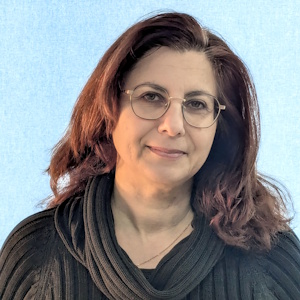
A. Papakonstantinou
Laboratory Center of Science Education
LCSE
Secondary education biology teacher and secondary Science laboratory teacher educator, with an MSc in Marine and Freshwater Biology and an MEd in Technology in Education, specializing in training secondary teachers to design and implement safe, inquiry-based laboratory experiments in schools. Active contributor to STEM education and author of teaching materials for the European Science on Stage network. Her work strongly promotes environmental awareness, with European 1st place award-winning projects such as Seewache: Guardian of the Sea (ocean literacy, blue careers, and the blue economy) and Acid Rain, Is It Pain?. She has coached student teams that achieved 3rd and 4th place in the WAICY 2025 World AI Competition for Youth with the projects FeelosophAI (supporting non-verbal autistic students) and Emotional Botany (precision agriculture and plant–human interactions). She is a member of Climademy, a European academy training teachers to address climate change. In SeaSeMe project, she will participate in community engagement by selecting and visiting schools interested in the platform to inform, promote, and publicize the platform to children and parents, conduct training activities related to the application, and gather valuable consumer feedback (WP3).
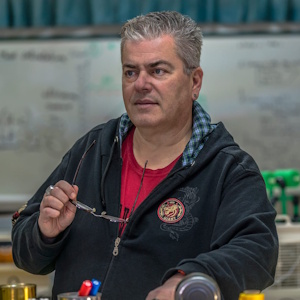
A. Tsoutsoudakis
Laboratory Center of Science Education
LCSE
Secondary education physics teacher and Science laboratory teacher educator, serving as Head of the 1st Laboratory Centre for Science Education in Heraklion, Crete. Holds an MEd in Technology in Education (e-learning) and specializes in training secondary teachers in the effective, safe, and inquiry-based use of laboratory experiments in school science. Mentor of robotics, mechatronics, and science student teams, fostering interdisciplinary STEM learning with a strong focus on environmental awareness and sustainability. Co-author of teaching materials for Science on Stage, the largest STEM teachers’ network in Europe, including the Adopt a Tree project, and serving as its Ambassador in Greece, actively supporting teacher professional development, dissemination of innovative practices, and large-scale educational impact. Awarded 1st place at a European sustainability competition for Seewache: Guardian of the Sea, a project promoting ocean literacy, blue careers, and the blue economy. Has also coached student teams that achieved 3rd and 4th place in the WAICY 2025 World AI Competition for Youth with the projects FeelosophAI (supporting non-verbal autistic students) and Emotional Botany (precision agriculture and plant–human interactions). Member of Climademy, a European academy training teachers on climate change. In SeaSeMe project, he will participate in community engagement by selecting and visiting schools interested in the platform to inform, promote, and publicize the platform to children and parents, conduct training activities related to the application, and gather valuable consumer feedback (WP3).
Dr. D. Chatzivasileiou
Institute of Oceanography
HCMR
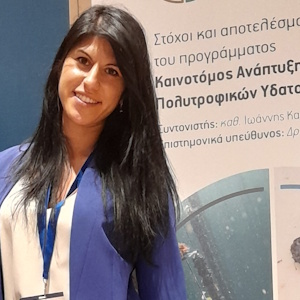
Dr. Dimitra Chatzivasileiou is a postdoc researcher at the Institute of Oceanography of the Hellenic Centre for Marine Research (HCMR) specializing in multitrophic aquaculture and the assessment of product safety for human consumption. She has research experience, participating in projects that study the safe consumption of aquaculture products, their interaction with benthic macrofauna and the development of multitrophic farms. In SeaSeMe project, she will participate in data collection and categorization (WP1); in the assessment of human health risks and benefits from seafood consumption and in platform/ application development in collaboration with SOC-UoC (WP2); as well as in community engagement through visits to schools, universities and other social activities (WP3), and in writing reports and scientific articles and participating in conferences (WP3).
Dr. G. Panagou
Institute of Oceanography
HCMR
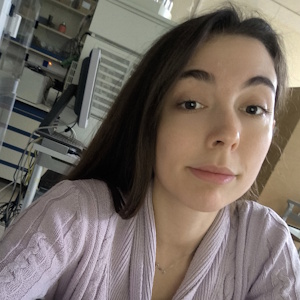
Dr Georgia Panagou is a Chemist and holds a PhD in Analytical Chemistry from the University of Crete (2025), supported by a fellowship from the Hellenic Foundation for Research and Innovation. Her research focuses on developing advanced mass spectrometry-based methods (LC-ICP-MS and LC-ESI-MS/MS) for metal speciation and metalloproteomics in environmental and biological systems, with an emphasis on marine organisms. She has collaborated with the Hellenic Centre for Marine Research on metallomic studies of fish tissues, contributing to risk-benefit assessments that support informed fish consumption choices. In SeaSeMe project, she will participate in data collection and sample analysis (if needed) and categorization for the platform (WP1); as well as in the assessment of human health risks and benefits from seafood consumption and in platform/ application development in collaboration with SOC-UoC (WP2).